
The short answer
- Hydrotherapy walk-in tubs use water jets, air jets or both (dual systems).
- Water jets give a strong, targeted massage; air jets give a gentle, all-over bubbling massage.
- Research on warm-water therapy for knee osteoarthritis shows reduced pain and stiffness in several meta-analyses, though study quality varies.
- A walk-in tub is not a medical treatment; ask your doctor before using hot water therapy if you have heart disease, blood pressure concerns, diabetes or are pregnant.
- Retirement Living reports hydrotherapy walk-in tubs typically cost $5,000 to $10,000.
- Jetted tubs usually need a dedicated GFCI electrical circuit.
What a hydrotherapy walk-in tub is
Every walk-in tub is built for safe entry: a watertight door, a low threshold, a built-in seat and grab bars. A hydrotherapy walk-in tub adds a massage system on top of that. Pumps or blowers move water or air through jets set into the backrest, seat, sides and footwell, so warm water moves against your body while you sit comfortably upright.
For many older adults, that combination is the whole point. You get into the tub safely, the warm water supports your weight, and the jets work on the places that ache: lower back, shoulders, hips, calves and the soles of your feet. Then you get out safely, too.
Hydrotherapy is optional. A soaking walk-in tub already gives you deep, warm, seated immersion, which many people find soothing on its own. Jets are an upgrade for people who want more than a soak.
Water jets, air jets and dual systems compared
Most walk-in tub manufacturers, including Ella’s Bubbles and Hydro Dimensions, offer three main therapy options. Here is how they differ.
| Water jets (hydro massage) | Air jets (air massage) | Dual system | |
|---|---|---|---|
| How it works | A pump pulls bath water in and pushes it back out through adjustable nozzles | A blower pushes warm air through many small openings in the tub floor and seat | Both a pump and a blower, controlled separately |
| How it feels | Firm, focused pressure you can aim at sore spots | Gentle, fizzy, full-body bubbling | Choose firm, gentle or both |
| Best for | Deep muscle aches, back and shoulder tension | Sensitive skin, fragile or bruise-prone skin, relaxation | People who want both options, households with more than one bather |
| Oils and bath salts | Many manufacturers advise against them in water-jet plumbing | Often compatible; check the manual | Follow the more restrictive rule |
| Cleaning | Water circulates through internal plumbing, so periodic cleaning matters | Air channels are usually purged after each bath | Both routines |
| Noise | Moderate pump sound | Blower hum | Both |
Water jets: firm, targeted massage
Water jets are what most people picture when they think of a whirlpool. A pump draws water from the tub and pushes it back through jet nozzles, often adjustable in direction and strength. Jets are commonly placed along the backrest and lower back, around the calves and in the footwell. Ella’s Big4Two two-seat tub, for example, pairs its hydro massage system with a separate foot massage section. If your aches are in specific muscles, water jets let you aim at them.
Air jets: gentle, all-over bubbles
Air systems use a blower to push warmed air through dozens of small holes in the tub surface. The result is a rolling, bubbling sensation over much of the body rather than a strong stream in one spot. People with thin or sensitive skin, or who bruise easily, often prefer air. Air systems are also popular with people who like bath salts, since there is less internal plumbing for residue to build up in, but always follow your specific tub’s manual.
Dual systems: the best of both
Dual-therapy tubs have both a pump and a blower, controlled separately. You can use gentle air one day and firm water jets the next, or run both. Dual systems cost more and have more components, but they suit couples and households where different people want different experiences.
Other comfort features that pair with jets
Hydrotherapy tubs often come with, or can add, features that make a long soak more comfortable:
- Heated backrest or seat. Keeps you warm while the tub fills and drains. Many people call this the feature they would never give up.
- In-line heater. Helps keep jet-circulated water at temperature during the bath.
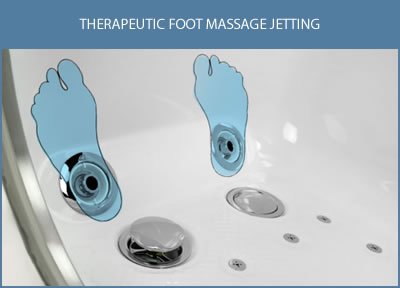
- Foot massage jets. A dedicated set of jets or rollers in the footwell for tired feet.
- Chromotherapy lighting. Colored underwater lights some people find relaxing.
- Aromatherapy. Scent systems designed for use with the tub’s therapy system.
- Ozone or UV sanitation. Systems some manufacturers offer to help keep jet plumbing cleaner.
- Microbubble therapy. Available on some models, such as Ella’s Big4Two, for a very fine, milky bubble effect.
What the research says about warm-water therapy
We want to be careful here, because health claims are where walk-in tub marketing often goes too far. A walk-in tub is not a medical device and it does not treat disease. But the research on warm-water immersion and hydrotherapy is real, and it is fair to tell you what it shows.
Knee osteoarthritis
Knee osteoarthritis is one of the most common reasons older adults tell us they want a jetted tub, and it is also where the research is strongest. A 2017 meta-analysis in Clinical Rheumatology by Matsumoto and colleagues concluded that balneotherapy, therapeutic bathing, was clinically effective in relieving pain and stiffness and improving function compared with controls in people with knee osteoarthritis. The authors also noted very high variation between studies, which means the size of the benefit is uncertain.
A more recent meta-analysis of hydrotherapy for knee osteoarthritis, available through PubMed Central, found hydrotherapy reduced pain and improved function without increasing adverse events. A 2023 systematic review in Rheumatology International on balneotherapy for osteoarthritis at several joints noted that international guidelines, including those from the Osteoarthritis Research Society International and the American College of Rheumatology with the Arthritis Foundation, give warm-water or thermal approaches a place as a complementary, non-drug option.
Rheumatoid arthritis and other conditions
The evidence is weaker for some other conditions. A Cochrane review of balneotherapy for rheumatoid arthritis concluded that the available studies were not strong enough to draw firm conclusions. Reviews exist for low back pain and fibromyalgia as well, with mixed quality. Much of the formal research uses mineral spa water in clinical settings, which is not the same as a home walk-in tub.
What that means for you
The fair summary is this: warm water and gentle massage help many people feel less stiff and more relaxed, and several studies support that for osteoarthritis. Results vary from person to person. A hydrotherapy tub can be a comfortable part of a daily routine, alongside, not instead of, the care your doctor recommends. For a deeper look at the research, read our guide to hydrotherapy benefits for seniors.
Safety first: who should check with a doctor
Hot water affects circulation and blood pressure. Before using a hydrotherapy tub regularly, check with your doctor if you:
- Have heart disease, a history of stroke, or high or low blood pressure.
- Take medications that cause drowsiness, dizziness or low blood pressure.
- Have diabetes or reduced feeling in your feet or legs, which makes it harder to sense water that is too hot.
- Have open wounds, skin infections or recent surgery.
- Are pregnant.
- Have a history of fainting or light-headedness when standing up.
Practical rules that apply to everyone:
- Keep the water comfortably warm, not hot. An anti-scald valve limits the maximum temperature, but comfort is personal.
- Limit early sessions to 15 or 20 minutes and see how you feel.
- Drink water before and after bathing.
- Stand up slowly, holding the grab bar, once the tub has drained.
- Keep a phone or medical alert button within reach.
What jets add to the cost
Jets add real value for people who use them, and real cost for people who do not. Retirement Living reports that air-bath and hydrotherapy walk-in tubs typically cost $5,000 to $10,000, compared with $2,500 to $5,000 for standard soaking tubs.
Source: Retirement Living (2026).
Show the numbers
| Tub type | Upper end of range |
|---|---|
| Standard soaking tub ($2,500–$5,000) | up to $5,000 |
| Air bath or hydrotherapy ($5,000–$10,000) | up to $10,000 |
| Bariatric ($7,000–$10,000) | up to $10,000 |
The added cost comes from:
- The therapy hardware. Pumps, blowers, jets, internal plumbing and controls.
- Electrical work. Most jetted tubs require a dedicated GFCI-protected circuit. Ask your installer what amperage your model needs.
- Heaters. In-line heaters and heated backrests add hardware and electrical load.
- Warranty exposure. More components means more parts that could need service, which is why warranty terms matter so much on jetted tubs.
Hydro Dimensions backs its walk-in tubs with a lifetime warranty covering the shell, frame, door seal, motors and parts. That motor coverage is especially valuable on a hydrotherapy tub. Our walk-in tub cost guide explains how to compare quotes line by line.
Keeping jets clean
A jetted tub needs a little more care than a soaking tub, but it is not complicated.
- Water jets: Because bath water circulates through internal plumbing, run the manufacturer’s cleaning or purge cycle on the recommended schedule, usually with a jet-cleaning solution. Avoid bath oils, bubble bath and bath salts in water-jet systems unless the manual says they are safe.
- Air jets: Many air systems run an automatic purge cycle after draining to blow remaining water out of the air channels. Let it finish.
- Surfaces: Wipe the acrylic with a non-abrasive cleaner after bathing.
- Door seal: Wipe the gasket clean so soap film does not build up.
- Sanitation options: Ask about ozone or UV options if you want extra help keeping the system fresh.
Hot water and hydrotherapy: plan for the fill
Jetted walk-in tubs are often larger than basic soaking models, and a long, warm soak needs a lot of hot water. Before you choose, check that your water heater can keep up. If it is borderline, options include a smaller-capacity tub, an in-line heater, a larger tank or a tankless water heater. Use the calculator in our water heater guide.
Choosing the right hydrotherapy walk-in tub
Work through these questions in order.
- What do you want the jets to do? Target sore muscles (water), relax and soothe sensitive skin (air), or have both (dual).
- Where are your aches? Back and shoulders favor backrest jets. Tired feet and poor circulation in the legs favor foot and calf jets.
- How do you get in? Match the door and threshold to your mobility first. Jets come second to safe entry.
- How big is your space? Many jetted tubs fit a standard 60-inch alcove. Two-seat and bariatric jetted tubs need more room.
- Can your electrical panel support it? Confirm a dedicated circuit is possible.
- Can your water heater fill it? Check capacity before you buy.
- What does the warranty cover? Motors, pumps, blowers and heaters are where coverage matters most.
Hydrotherapy with bariatric, two-seat and transfer tubs
Jets are available on many specialty tubs, not just standard models.
- Bariatric tubs can include hydrotherapy with wider seats and more interior room. See bariatric walk-in tubs.
- Two-seat tubs such as Ella’s Big4Two can include both hydro and air systems for two bathers.
- Wheelchair transfer tubs such as Ella’s Transfer60 are available with hydro massage. See wheelchair-accessible walk-in tubs.
Installation and delivery for jetted tubs
We install hydrotherapy walk-in tubs in one day in many areas using factory-certified installers, including connecting and testing the jets, heater and controls. If you prefer your own installer, or you live in Canada, we drop-ship the tub with the electrical specifications your electrician will need. Every jetted tub includes the manufacturer’s warranty plus a 1-year labor warranty from Aging Safely Baths.
Living with a jetted tub: what owners tell us
After years of helping families choose hydrotherapy tubs, a few patterns come up again and again in follow-up calls.
- The heated backrest gets used more than anything else. People expect to love the jets, and they do, but the warm backrest during the fill and drain is what makes the whole bath comfortable in winter.
- Foot jets surprise people. Many buyers treat foot massage as a small extra, then tell us it is their favorite part, especially if they stand all day or have tired feet at night.
- Shorter, more frequent soaks are common. Instead of a long weekly bath, many owners settle into a 15- to 20-minute evening soak several times a week.
- Simple controls win. Large, clearly labeled buttons matter more than a long list of settings, especially for anyone with arthritis in the hands or reduced vision.
- Cleaning is easier when it is routine. Owners who run the purge or cleaning cycle on a schedule rarely have issues.
Where jets are placed, and why it matters
Two tubs can both advertise “hydrotherapy” and feel completely different, because the number and position of the jets decides where you actually feel the massage. When you compare models, ask for the jet map and match it to where you hurt.
| Jet location | What it targets | Who tends to value it |
|---|---|---|
| Upper backrest | Shoulders and upper back | People who carry tension in the neck and shoulders |
| Lower backrest | Lumbar muscles | People with lower back stiffness |
| Seat or hip area | Hips and glutes | People with hip stiffness |
| Calf jets | Lower legs | People on their feet all day, or with tired, heavy legs |
| Footwell jets or rollers | Soles of the feet | Almost everyone once they try it |
| Floor air jets | Whole body, gently | People with sensitive skin who want a soothing bubble |
More jets is not automatically better. Well-placed, adjustable jets that hit your problem areas matter more than a big number on a brochure.
Hydrotherapy tub vs. a hot tub or spa visits
Some families weigh a jetted walk-in tub against an outdoor hot tub or regular visits to a pool or spa. Each has a place, but for older adults the differences are practical.
| Hydrotherapy walk-in tub | Outdoor hot tub | Pool or spa visits | |
|---|---|---|---|
| Getting in | Door, low threshold, seat at chair height | Climb over a high wall and steps, often outdoors | Pool steps or ladders, wet deck |
| Weather | Indoors, any season | Exposed to cold, ice and rain | Travel required |
| Privacy | Your own bathroom | Your yard | Public |
| Daily bathing | Doubles as your everyday bath | Not for bathing | Not for bathing |
| Water | Fresh water every time | Treated water kept for weeks | Treated water |
For most seniors, the walk-in tub wins on the one thing that matters most: you can get in and out safely, every day, without leaving home.
A realistic weekly routine
Owners get the most from a jetted tub when it fits naturally into their week. Here is a simple routine many people settle into.
- Evenings, three to five times a week: a 15- to 20-minute warm soak with jets on a comfortable setting before bed.
- After activity: a short session after gardening, walking or physical therapy, if your therapist agrees.
- Once a week: wipe down the door seal and surfaces with a non-abrasive cleaner.
- On the manufacturer’s schedule: run the jet cleaning cycle with the recommended solution.
- Every few months: check the door gasket for wear and call if you notice any drip.
Keep a note of how you feel after baths for the first few weeks. If a setting leaves you light-headed, lower the temperature and shorten the session. If something helps, you will know exactly which setting to use.
Questions to ask before buying a jetted walk-in tub
Bring these questions to any dealer, including us:
- How many jets are there, where are they placed, and are they adjustable?
- Is it a water, air or dual system, and can each be controlled separately?
- Is there an in-line heater to keep the water warm during the bath?
- Is there a heated backrest or seat?
- What electrical circuit does it require, and does the quote include running it?
- How is the system cleaned, and is there an automatic purge?
- Can I use bath salts or oils in this system?
- What exactly does the warranty cover on pumps, blowers, heaters and controls, and for how long?
- Are the controls large and easy to read and press?
- Who services the system if a part fails?
Controls that are easy on arthritic hands
A therapy system is only useful if you can operate it comfortably. Look for large, raised buttons or simple touch controls within reach of the seat, clear labels you can read without glasses, and separate on-off buttons for each system rather than menus. If a family member will help set things up, it is worth sitting in the tub, if possible, or asking for a photo of the control panel before you buy.
Is a jetted tub right for you?
A hydrotherapy walk-in tub is a good fit if you already love baths, if stiffness or muscle aches are part of daily life, and if you will use the jets regularly. It is less of a fit if you rarely bathe, if your budget is tight and safety is the main goal, or if your electrical panel or water heater would need major upgrades. There is no wrong answer: a safe soaking tub is a great choice, and a hydrotherapy tub is a great choice for the people who will use it.
Hydrotherapy for caregivers, too
Jetted walk-in tubs are not only for the person in the tub. Caregivers tell us a seated, supported bath changes their day as well. There is less lifting and bending, less worry about slips, and a handheld shower makes rinsing easy without leaning over a tub wall. When a bath is relaxing instead of stressful, it stops being a chore both people dread. For households where a caregiver helps with bathing, an outward-swinging door, a handheld shower on a long hose and grab bars on both sides of the seat make the biggest difference.
Why buy a hydrotherapy tub from Aging Safely Baths
- An authorized Ella’s Bubbles dealer since 2012, plus Hydro Dimensions, Meditub and Bestbath, so we can match the therapy system to you rather than to a single brand.
- One-day installation by factory-certified installers in many areas, including connecting and testing every jet, heater and control.
- DIY delivery anywhere in the US and Canada with electrical specs for your electrician.
- BBB Accredited with an A+ rating, and a 1-year labor warranty on installed and supply-only orders.
Call 1-888-779-2284 or request a free quote to compare soaking, air, water and dual systems for your bathroom.
Frequently asked questions
What is the difference between air jets and water jets in a walk-in tub?
Water jets use a pump to push bath water through adjustable nozzles for a firm, targeted massage. Air jets use a blower to push warm air through many small openings for a gentle, full-body bubbling massage. Dual systems include both, controlled separately.
Do hydrotherapy walk-in tubs help arthritis?
Several meta-analyses have found that balneotherapy and hydrotherapy reduced pain and stiffness and improved function in people with knee osteoarthritis, though study quality varies. A walk-in tub is not a medical treatment, and results differ from person to person, so talk with your doctor.
How much more does a walk-in tub with jets cost?
Retirement Living reports hydrotherapy and air-bath walk-in tubs typically cost $5,000 to $10,000, compared with $2,500 to $5,000 for standard soaking tubs. Electrical work for a dedicated circuit can add to the installed price.
Does a jetted walk-in tub need a special electrical circuit?
Most jetted walk-in tubs require a dedicated GFCI-protected circuit. The amperage depends on the model and whether it has a heater. Your installer or electrician should follow the manufacturer’s specification and local code.
Can I use bath salts or bubble bath in a jetted walk-in tub?
Many manufacturers advise against oils, bubble bath and bath salts in water-jet systems because residue can build up in internal plumbing. Air-jet systems are often more tolerant. Always follow your tub’s manual.
How do I clean the jets in a walk-in tub?
Water-jet systems should be cleaned periodically using the manufacturer’s recommended cleaning cycle and solution. Many air-jet systems run an automatic purge after draining. Wipe surfaces and the door seal with a non-abrasive cleaner after bathing.
Is hot water therapy safe for seniors?
For many people, yes, with sensible precautions: comfortably warm water, shorter sessions at first, water to drink, and standing up slowly. Anyone with heart disease, blood pressure concerns, diabetes, a history of fainting or who is pregnant should ask their doctor first.
Can I get jets on a wheelchair-accessible or bariatric walk-in tub?
Yes. Many transfer tubs, bariatric tubs and two-seat tubs are available with air, water or dual massage systems.
Sources
- Matsumoto H, et al. The effect of balneotherapy on pain relief, stiffness, and physical function in patients with osteoarthritis of the knee: a meta-analysis. Clin Rheumatol. 2017
- Hydrotherapy for knee osteoarthritis: a meta-analysis (PubMed Central)
- Balneotherapy for osteoarthritis: a systematic review. Rheumatology International, 2023
- Retirement Living, Why Are Walk-In Tubs Expensive? (2026)
- ConsumerAffairs, Best Two-Person Walk-In Tubs (Ella’s Big4Two details)
- ConsumerAffairs, Hydro Dimensions walk-in tubs